 4.9 Star 115+ Customer Reviews

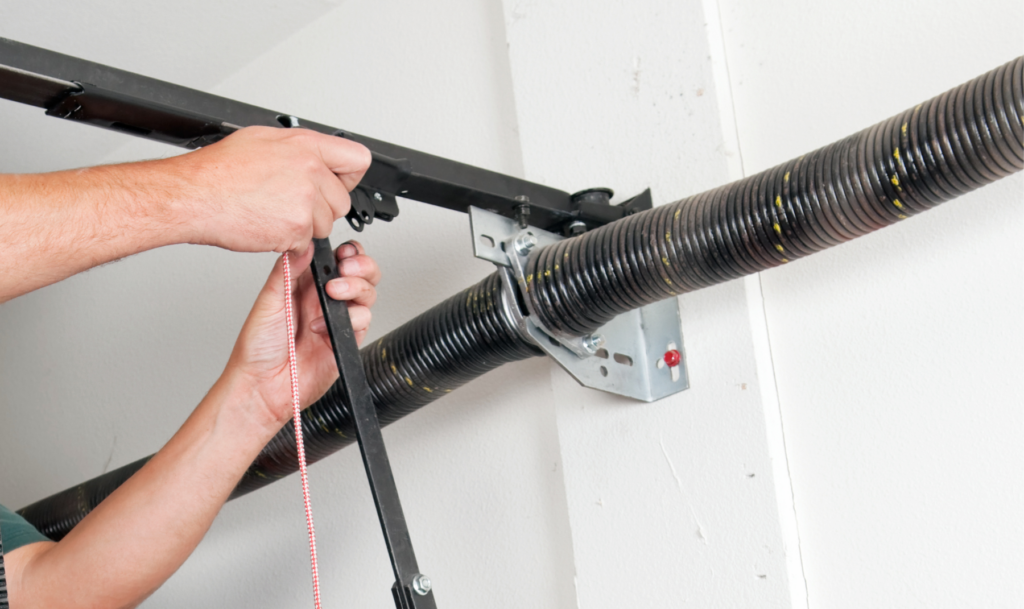
Garage door springs do a lot of heavy lifting every time you open or close your garage. Although they often go unnoticed, these components help support the door’s weight and allow the opener to move it safely. Over time, repeated use causes wear, and eventually, even a well-maintained spring will need to be replaced.
For homeowners in Lawrenceville, GA, recognizing the warning signs of worn garage door springs can help prevent unexpected breakdowns. Understanding how long springs typically last and when to seek professional service can also help you avoid getting stuck with a garage door that won’t open.
How Long Do Garage Door Springs Typically Last?
Most residential garage door springs are rated by cycles rather than years. One cycle generally means opening the door once and closing it once.
Standard garage door torsion springs are commonly rated for approximately 10,000 cycles, although some higher-cycle options are designed to last much longer. Extension springs also have a finite service life, depending on their construction, quality, and usage.
How long that translates into years depends largely on how often you use the garage.
For example, a household that opens and closes its garage door four times daily uses approximately 1,460 cycles per year. A spring rated for 10,000 cycles could reach its expected service life in around seven years under those conditions. A household that uses the door more frequently may wear out its springs sooner.
These figures are estimates rather than guarantees. Installation quality, spring sizing, door balance, maintenance, and environmental conditions can all affect actual lifespan.
1. Your Garage Door Feels Heavier Than Usual
One of the clearest signs of a failing spring is a garage door that suddenly feels heavier than normal.
The springs counterbalance the door’s weight, allowing it to move without placing excessive strain on the opener. When a spring weakens or breaks, the door may become difficult to lift or may no longer open properly.
You might notice that the opener struggles, the door moves only a short distance, or the system stops before reaching the fully open position.
Don’t continue forcing the door to operate. A weakened spring can make the door unpredictable, and the added strain may damage the opener or other components.
2. You Hear a Loud Bang From the Garage
A sudden, loud bang from the garage can sometimes indicate that a torsion spring has broken. The sound may resemble a firecracker or a heavy object falling.
Because springs are under substantial tension, a break can happen abruptly even when there have been no obvious warning signs.
After hearing such a noise, inspect the garage door visually from a safe distance. You may notice a visible gap in the torsion spring mounted above the door or find that the door no longer opens normally.
Avoid touching the spring, attempting to reconnect it, or operating the door repeatedly. Contact a trained garage door technician to assess the damage.
3. The Door Opens Unevenly
Garage doors should travel smoothly and remain reasonably level as they open and close. If one side appears higher than the other, a spring or cable problem may be responsible.
This is particularly important for systems that use extension springs or multiple springs to support the door.
Uneven movement can also result from damaged tracks, worn rollers, or other mechanical issues. A professional inspection can help determine which component is responsible.
Continuing to operate an uneven door may increase stress on the tracks, cables, rollers, and opener. If the door appears crooked or unstable, leave it alone until the system has been checked.
4. You Notice Gaps or Visible Wear on the Springs
A broken torsion spring may have a noticeable gap between its coils. In some cases, corrosion, deformation, or other visible damage may suggest that a spring is deteriorating.
However, springs can also weaken internally without obvious external signs. A spring that looks intact isn’t necessarily functioning correctly.
You can visually inspect the garage door system from a safe distance, but don’t touch the springs or attempt to test their tension yourself.
If you notice damage, unusual movement, or a change in how the door operates, arrange a professional inspection before the problem becomes more serious.
5. The Garage Door Closes Too Quickly
Garage door springs help control the movement of the door by counterbalancing its weight. When they are damaged or no longer providing adequate support, the door may close faster than expected or behave unpredictably.
A door that slams shut is a serious safety concern. It can damage the door itself, place stress on the opener, and create a risk of injury.
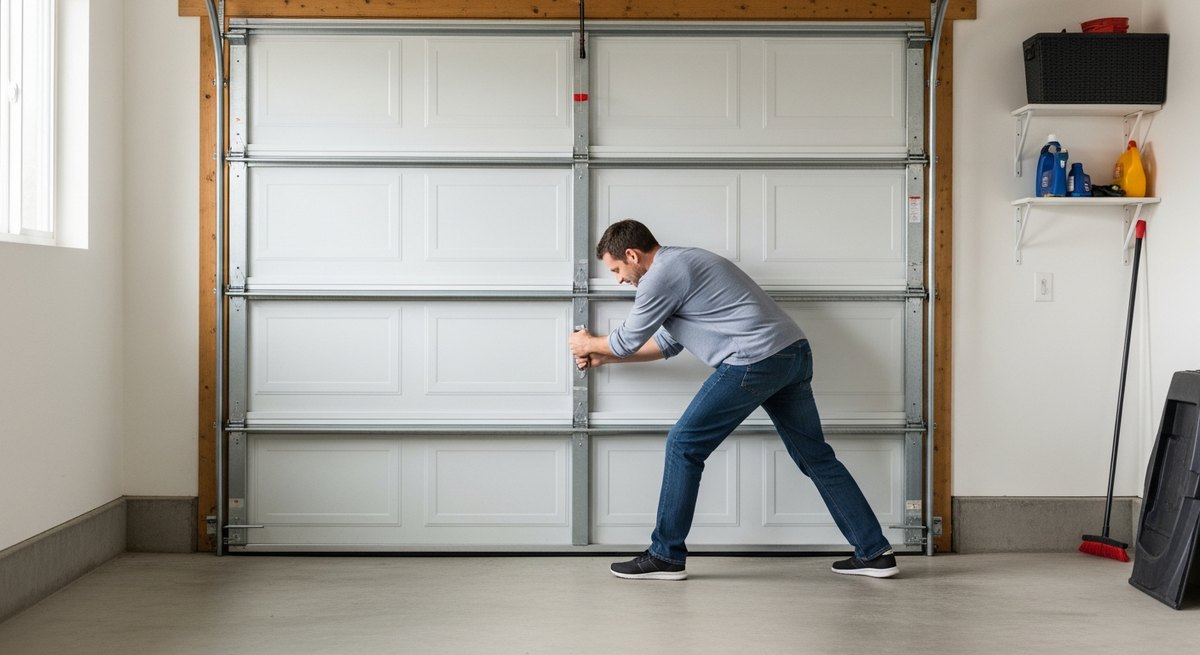
Don’t attempt to compensate for a weak spring by adjusting the opener’s force settings. Those settings aren’t a substitute for a properly balanced door.
Stop using the system and arrange professional service to identify the cause.
Why Garage Door Springs Wear Out
Spring failure is a normal part of garage door ownership, but several factors can affect how quickly it happens.
Frequent use: Every opening and closing cycle contributes to spring fatigue. Families who use the garage as their main entrance may reach the spring’s rated cycle count sooner.
Incorrect spring sizing: Springs must be matched to the door’s weight and dimensions. An improperly sized spring may wear out prematurely or cause operating problems.
Corrosion: Moisture and corrosion can weaken metal components over time, increasing the likelihood of failure.
Poor door balance: If other components create resistance or the door is improperly balanced, the system may experience additional stress.
Age: Even springs that receive regular maintenance eventually reach the end of their useful life.
Can You Prevent Garage Door Spring Failure?
You can’t prevent springs from wearing out eventually, but routine maintenance can help identify developing problems and support reliable operation.
Professional garage door maintenance typically includes inspecting springs, cables, rollers, tracks, and other moving components. A technician can also assess door balance and identify issues that may put unnecessary strain on the system.
If your springs are nearing their expected cycle life, ask about replacement options before they fail unexpectedly. Higher-cycle springs may be available for households that use their garage doors frequently.
Never attempt to lubricate, adjust, or replace a spring while it is under tension unless you’re a trained professional equipped to perform the work safely.
Should Both Garage Door Springs Be Replaced?
If your garage door uses two springs and one breaks, replacing both may be recommended, particularly when they were installed at the same time.
The remaining spring has typically experienced a similar amount of wear, so it may be approaching the end of its service life as well. Replacing both together can help restore balanced operation and reduce the likelihood of another service visit soon afterward.
The right approach depends on the spring system, the condition of the remaining spring, and the manufacturer’s specifications. A technician can inspect the setup and explain the available options.
Professional Garage Door Spring Replacement in Lawrenceville, GA
A worn or broken garage door spring can turn a routine day into a frustrating situation. Recognizing the signs early, understanding the expected lifespan of your springs, and scheduling maintenance can help you prepare for replacement before a complete failure occurs.
The Garage Door Guys provides garage door spring replacement in Lawrenceville, GA, helping homeowners address worn or damaged springs and restore dependable operation. If your door feels unusually heavy, moves unevenly, or makes a sudden loud noise, stop operating it and arrange a professional inspection.
Because garage door springs are under high tension, replacement should be handled by a qualified technician rather than attempted as a DIY repair.